
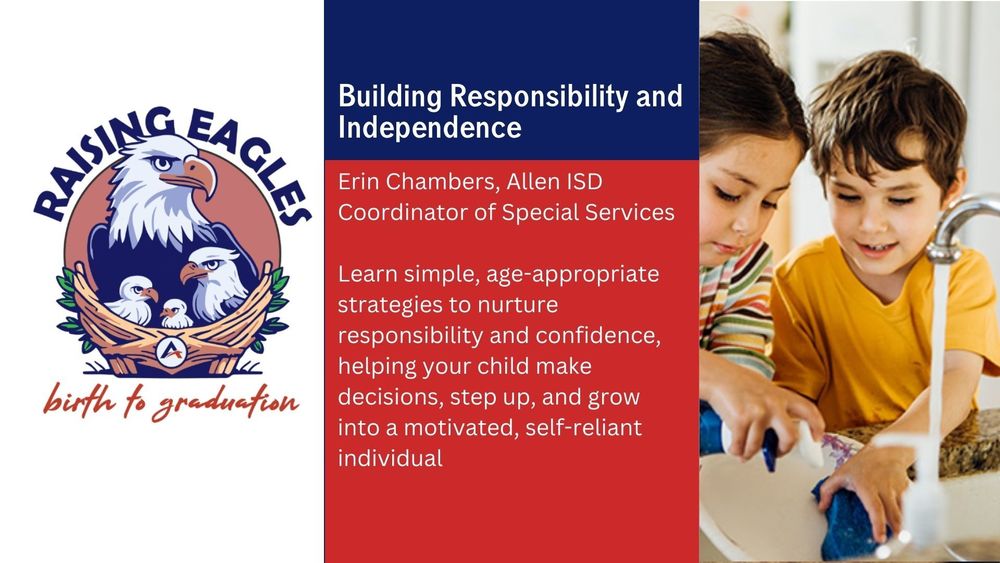
Practical Strategies That Strengthen Confidence and Support School Success
Families want children who are confident, capable, and ready to handle life both inside and outside the classroom. Responsibility and independence are not traits children suddenly develop. They are built intentionally, step by step, through daily practice.
This session focuses on practical, age appropriate strategies that can be implemented immediately at home. The goal is simple: teach children how to do tasks independently without stepping in and doing the task for them. When home routines reinforce responsibility, school success becomes a natural extension.
Watch the Video
Why Responsibility Matters
Confidence grows when children feel capable.
Many children default to “I cannot do it” or “I do not know how.” When a task feels overwhelming, frustration sets in quickly. The solution is not lowering expectations. The solution is breaking expectations into teachable steps.
Responsibility helps children feel:
Valued
Trusted
Capable
Part of a team
Classrooms operate as communities. So do homes. When children contribute at home, they understand shared responsibility. That mindset carries directly into the classroom.
This is not an overnight shift. Small, daily opportunities create lifelong skills. Moving from zero expectations to 15 responsibilities at once will overwhelm both adults and children. Growth happens gradually.
The Foundation: Teach the Skill Before Expecting Independence
Independence does not begin with “Go do it.”
It begins with teaching.
Just as math has prerequisite skills, life skills do too. A child cannot tie shoes independently without first learning how to cross laces, make loops, and pull tight. The same principle applies to every responsibility.
Break Big Tasks into Small Steps
Adults naturally chunk tasks. Children often cannot.
Take brushing teeth. “Brush your teeth” sounds simple, but it includes many steps:
Go to the bathroom
Get the toothbrush
Find toothpaste
Wet the brush
Apply toothpaste
Brush all surfaces
Rinse
Put materials away
When a child resists a task, it is often because the task feels too large. Breaking it down reduces overwhelm and increases success.
The Teaching Model: I Do, We Do, You Do
I Do
Model the skill. Show each step.We Do
Complete the task together.You Do
Gradually release responsibility.
Consider vacuuming. Handing a child a vacuum and saying, “Go vacuum the room,” invites frustration. Instead:
Model plugging it in safely.
Demonstrate turning it on.
Show how to move slowly across the floor.
Practice together.
Gradually step back.
The same applies to putting on shoes, cleaning surfaces, loading the dishwasher, or managing a backpack.
If the skill is never taught, adults will keep doing it long term.
The Power of Choice
Choice builds ownership and reduces power struggles.
Offering limited, appropriate options gives children control while still accomplishing the task. This is sometimes called a fail safe choice. The adult controls the options. The child chooses between them.
Examples:
“Clean up now or after this song?”
“Red shirt or blue shirt?”
“Five minutes or ten minutes before starting?”
In cold weather, the choice might be between two required options, such as pants or a sweatshirt. The expectation remains. The child gains agency within that boundary.
No one wins a power struggle. Choice keeps teaching intact.
Start Small and Build Over Time
Early Childhood Responsibilities
Put clothes in a hamper
Throw away trash
Wipe small spills with help
Carry light items
Place shoes in a designated spot
Help with simple bedtime routines
Yes, it is often faster for adults to do these tasks. But speed today creates dependence tomorrow.
Teach slowly so independence grows.
Elementary Age: Expanding Skill Sets
Making beds
Loading and unloading parts of the dishwasher
Taking out trash
Putting groceries away
Sweeping
Cleaning windows with supervision
Cleaning up shared spaces
Schools operate this way. Students clean tables and pick up materials because classrooms are community spaces. Home operates the same way.
If children learn to care for shared spaces at home, they transfer that expectation to school.
Middle School and High School: Preparing for Adulthood
Feeding and walking pets
Packing lunch
Managing school materials
Using planners or agendas
Completing laundry from start to finish
Cooking simple meals
Cleaning bathrooms safely
Many older students still require explicit instruction in organization. These are not assumed skills. They are taught skills.
One important reminder: effort matters more than outcome.
If a child cleans a mirror using the wrong product, acknowledge the initiative first. Then review the result together and adjust the process. Correcting without teaching misses the opportunity to build skill.
Let Them Try
Do not introduce new expectations at 7 a.m. on a busy Monday.
Teach during calm moments.
Start with one or two priorities.
Build slowly.
An escalated adult cannot calm an escalated child. Learning happens when everyone is regulated.
Use Specific Praise
“You put your plate in the trash and your cup in the sink.”
“You remembered to take your folder out of your backpack.”
Specific praise increases repetition. Children repeat behaviors that are clearly reinforced.
The First Then Strategy
“First this, then that.”
First homework, then screen time.
First clean up, then play.
First put shoes away, then snack.
The Importance of Routines
Designated spot for shoes and backpacks
Take lunchbox out immediately
Put water bottle back in backpack
Pick snack from approved options
Place folder in backpack
Visual schedules can help:
Pictures for younger children
Written checklists for older children
Adults use checklists daily. Teaching children to rely on them builds lifelong organization skills.
Task Analysis: A Special Education Strategy for Every Home
Put pajamas on
Brush teeth
Put clothes in hamper
Choose book
Get in bed
Every child’s starting point will be different. Families know best where to begin.
How Responsibility at Home Impacts School
Follow classroom routines
Transition between activities
Try tasks independently
Recover from mistakes
Ask for help appropriately
Manage materials
Handle feedback
Handling Common Challenges
When Tasks Trigger Meltdowns
Define the exact task. Is it too big?
Break it down.
Catch resistance early.
Offer help before escalation.
Build skill gradually.
Laundry for Young Children
Start with sorting socks.
Adult folds, child puts away.
Gradually shift more folding to the child.
Supporting Children with ADHD
Proximity. Give directions nearby, not across the house.
Eye contact and attention before speaking.
Ask the child to repeat instructions.
Use visual checklists.
Provide time warnings.
Use timers for transitions.
Sibling Comparison
Responsibilities grow with age.
When older children were younger, expectations were smaller.
Growth means new responsibilities.
Procrastination
Set clear deadlines.
Provide advance warnings.
Use timers.
Offer limited choice in timing.
Use first then language.
Managing Toys and Large Projects
Establish a rule that pieces stay on a surface.
Create a designated storage home.
Set cleanup deadlines when possible.
Rotate sets to reduce overwhelm.
Limit how many bins are available at once.
Where to Start
One or two stress points in the home.
Break them down.
Teach during calm moments.
Model.
Practice.
Gradually release control.
Involve children when appropriate. Provide a short list of acceptable responsibilities and allow them to choose.
The goal is not perfection. The goal is progress.
The Core Takeaways
Teach before expecting independence.
Break tasks into small steps.
Model using I do, we do, you do.
Offer limited choices to reduce power struggles.
Use first then language.
Be consistent with routines.
Praise effort specifically.
Teach during calm moments.
Build slowly.
Responsibility is not about chores. It is about confidence, ownership, and preparation for adulthood.
When children feel capable at home, they show up capable at school.
Daily practice builds lifelong independence.