
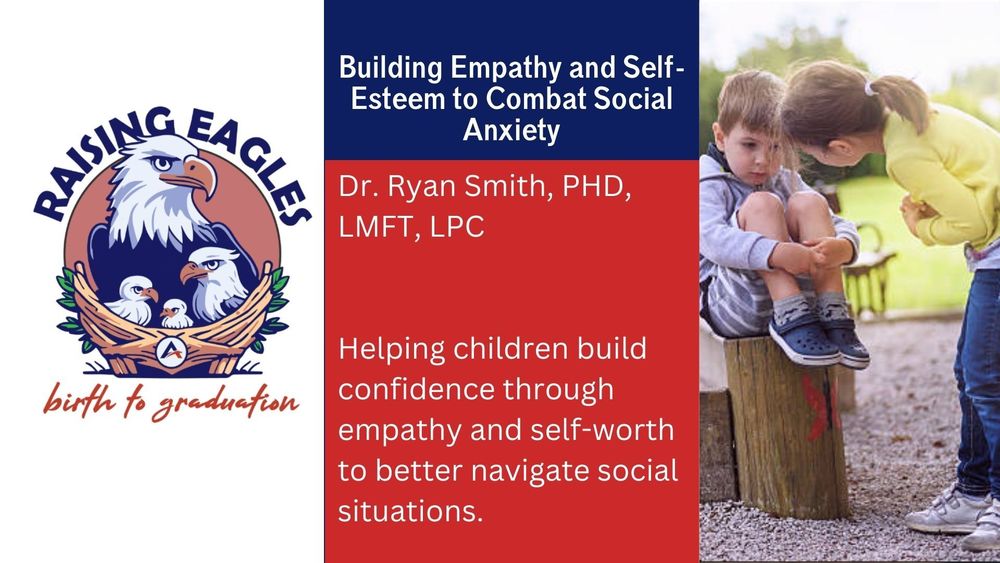
Why Social Anxiety Deserves Our Attention
Social anxiety in children is no longer a fringe concern. It is showing up earlier, more frequently, and with greater intensity than in previous generations. Much of this rise coincides with the digital age, increased comparison culture, reduced face-to-face interaction, and fewer opportunities for unstructured play.
This training focuses on understanding what social anxiety actually is, where it comes from, and most importantly, what parents and caregivers can do at home to help children navigate it with confidence rather than fear.
The goal is not to eliminate anxiety altogether. Anxiety is not a flaw or a failure. It is a signal. When we understand what that signal is telling us, we can respond in ways that build empathy, competence, and resilience.
What Social Anxiety Is and What It Is Not
Social anxiety is not simply feeling uncomfortable in a new place or nervous before meeting new people. That kind of discomfort is normal and developmentally appropriate.
Social anxiety is defined as a persistent fear of social situations where a child worries about being judged, embarrassed, rejected, or excluded. The key word is persistent.
If the fear shows up repeatedly, even in familiar settings or with people the child already knows, it may be more than typical social stress.
This distinction matters because it changes how we respond. Normal discomfort calls for encouragement and exposure. Persistent fear calls for skill building, emotional support, and intentional scaffolding.
Where Social Anxiety Comes From
Fear of Negative Evaluation
Children begin to worry about how others perceive them. A single comment, such as being called weird or ugly, can lodge deeply in a child’s thinking and reshape how they approach social situations.
Sometimes this fear comes from internal assumptions. At other times, it comes from real-life experiences. Both need to be addressed honestly rather than dismissed.
Underdeveloped Empathy and Self-Esteem Systems
Children are still building the internal structures that allow them to feel secure in social environments. When empathy and self-esteem are underdeveloped, anxiety often fills the gap.
This is not a parenting failure. It is a developmental reality. Some children are also naturally more emotionally aware, which can actually increase anxiety when they perceive social dynamics more intensely than their peers.
Developmental Wiring
Children do not yet have fully developed prefrontal cortexes. This affects impulse control, emotional regulation, and perspective taking. Poor decisions and heightened emotional reactions are part of normal development, not evidence of character flaws.
Comparison Culture
Previous generations compared themselves to a small peer group. Today’s children compare themselves to a global audience through social media and short form video.
Instead of being one of the best in a class of twenty, children now see peers online performing at elite levels. This constant comparison quietly erodes confidence and fuels anxiety.
Loss of Unstructured Play
Unstructured play allows children to negotiate roles, manage conflict, test boundaries, and build social competence without adult intervention.
As unstructured play disappears, so do many of the natural opportunities children need to develop confidence and empathy.
Lawnmower Parenting
Removing every obstacle from a child’s path prevents them from learning how to solve problems, speak up for themselves, and tolerate discomfort. While protection has its place, over-intervention can unintentionally increase anxiety.
Why Empathy and Self-Esteem Are the Antidote
Empathy Creates Social Safety
Empathy is the ability to consider another person’s experience. While we can never fully understand someone else, the effort itself builds connection.
Empathy reduces loneliness, which is one of the strongest predictors of social anxiety. Often, isolation comes first, and anxiety follows, not the other way around.
Empathy also builds predictability. When children can anticipate how others might feel or respond, social situations become less threatening.
Self-esteem is Competence, Not Compliments
True self-esteem does not come from praise alone. It comes from competence. Competence is built through three experiences:
Mastery – Children learn they can do hard things and improve with effort.
Autonomy – Children learn their choices matter and they have some control over their world.
Belonging – Children learn they are valued for who they are, not just for what they produce.
When these three are present, confidence rises and anxiety falls.
How Praise Often Misses the Mark
Praise is important, but how we praise matters.
When praise focuses only on outcomes such as grades, points, or performance, children become dependent on external validation. This does not build lasting self-esteem.
Outcome-focused praise can also encourage shortcuts, perfectionism, or avoidance of challenges.
Effective praise highlights process, effort, strategy, persistence, and growth. It teaches children how success happens, not just that success occurred.
Practical Strategies Parents Can Use Immediately
Five Minute Emotional Check Ins
Daily emotional check-ins build emotional vocabulary and regulation.
One thing that hurt today
One thing that helped today
One thing that humbled you today
Children do not need to answer every prompt. The goal is to normalize the full range of emotional experience, not to dwell on negativity.
The Brave but Not Perfect Practice
Ask children to identify one brave thing they did that day.
Bravery looks different depending on the child. For one child, it may be saying hello. For another, it may be standing up for someone else or including a peer.
Celebrating bravery teaches children to view themselves as capable of courage, even when they feel afraid.
The Three Minute Mirror
Each day, reflect back three observations about effort, character, or persistence.
You stuck with that even when it was frustrating.
You showed kindness when it would have been easier not to.
You worked through a problem instead of giving up.
This strengthens relational self-esteem by helping children see themselves accurately and positively.
Praise the Process, Not Just the Product
Whether it is academics, sports, art, or music, emphasize how effort led to results. Highlight preparation, practice, decision-making, and perseverance. Outcomes matter, but they should not be the only thing that matters.
The Empathy Workout
Once a week, take a conflict or disagreement and have children argue the other perspective.
Cognitive empathy
Flexibility in thinking
Reduced black and white thinking
It also teaches children that most conflict comes from misunderstanding rather than malice.
Preview, Practice, and Plan One Connection
Preview what might happen
Practice possible responses
Plan one specific connection
Success is not making lots of friends. Success is making one meaningful connection.
Daily Habits That Reduce Anxiety
Reduce constant evaluation and judgment
Increase descriptive, process-focused language
Ensure daily unstructured play without devices
Model self-compassion and healthy struggle out loud
Limit digital comparison, especially short-form video
Read deep fiction regularly to build empathy
The Power of Fiction
Reading fiction is one of the most effective ways to build empathy. Stories allow children to experience perspectives, emotions, and challenges beyond their own.
Children can handle deeper fiction earlier than many adults realize. Shared reading several times a week can have long-lasting emotional benefits.
Final Takeaway
Social anxiety is not a defect. It is a signal that a child needs support in empathy, competence, and emotional safety.
When children feel capable, connected, and understood, anxiety loses its grip.
Parents cannot remove every painful moment, but they can give children the tools to navigate those moments with confidence and resilience.
That is the goal.