
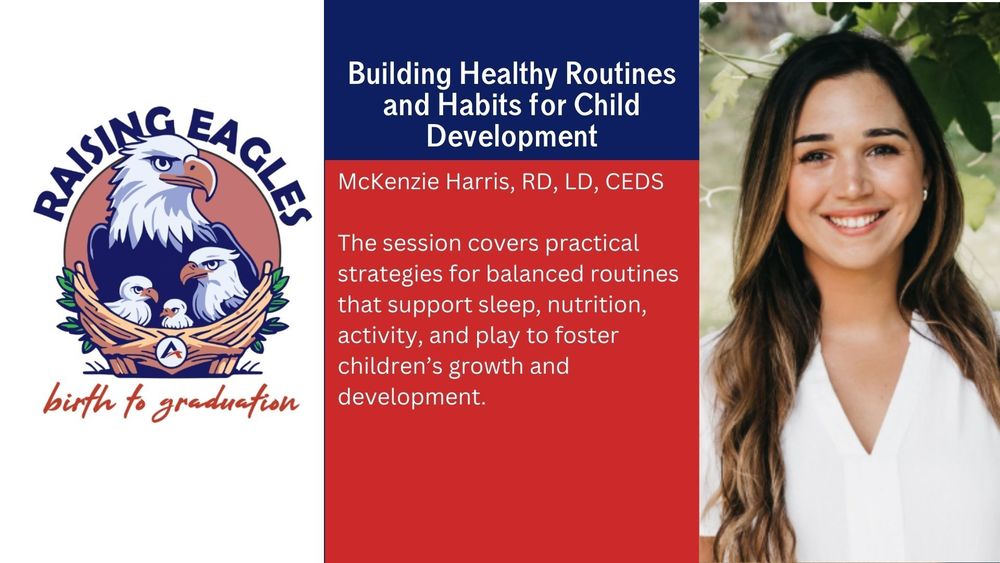
Building healthy routines and habits for K-6 kids
Nourish to Flourish: How food, movement, and structure impact kids’ bodies and brains
This session focused on one goal: helping families build routines that support kids’ growth, mood, learning, and overall wellbeing. The emphasis was not on “perfect parenting” or rigid rules. It was on practical structure that helps kids feel safe, regulated, and supported.
The training brought four big ideas together:
- Health is bigger than food and body size
- Kids thrive with consistent rhythms and predictable structure
- The language we use about food and bodies can protect kids from shame and disordered eating
- Nutrition, movement, and sleep work together to shape mood, behavior, focus, and development
The speaker, Mackenzie Harris, is a registered dietitian and certified eating disorder specialist. Her lens is strongly grounded in mental health, eating disorder prevention, and how routines influence a child’s brain and body. Many families came with practical questions about picky eating, screen time, bedtime hunger, and supporting kids who seem to eat too little or too much.
What follows is the core content and the key takeaways, organized so it can be referenced later.
Watch the video
1. Redefining “healthy” for families
A major theme early on was that many adults have absorbed a narrow, culture-driven definition of health:
- “Healthy” equals thin, fit, clean eating, low sugar
- “Unhealthy” equals processed food, carbs, calories, “junk,” “cheat days”
That definition is incomplete and can be harmful, especially around children.
A better framework: health is multidimensional
Instead of health being a single outcome like weight or appearance, the session emphasized that health includes multiple dimensions. Food and routines influence:
- Physical wellbeing (growth, energy, immunity)
- Mental and emotional wellbeing (mood, anxiety, resilience)
- Social wellbeing (connection, belonging)
- Financial wellbeing (what is realistic and sustainable)
- Occupational or academic functioning (attention, stamina)
- Spiritual, environmental, and intellectual wellbeing
A practical way to picture it: think of health like a mixing board with multiple sliders. If one slider is maxed out (like physical fitness) while another is dropped (like mental health or social connection), that is not a balanced life.
This matters because families often try to “fix” behavior or mood by focusing only on food rules or weight. But kids and families function best when the full set of needs is considered.
2. Four pillars of regulation for kids
- Balanced nutrition
- Body respect and support
- Joyful movement
- Rest, sleep, and daily rhythms
These pillars work together. A child’s ability to regulate emotions, focus at school, and sleep well is closely tied to eating consistently, moving regularly, and having predictable daily routines.
3. Nutrition basics: what matters most
Parents carry most of the responsibility for the structure around eating. Kids carry most of the responsibility for listening to their bodies. The session kept returning to this: your job is to provide consistent opportunities to eat. Your child’s job is to decide what and how much to eat from what is offered.
The hierarchy of nutrition priorities
- Adequacy: Is the child getting enough overall energy?
- Balance: Are they getting food from multiple food groups?
- Variety: Are they getting different foods within food groups?
- Individual nutrients: Omega-3s, vitamins, minerals, specific “superfoods”
Many parents jump to the fourth category first, worrying about supplements or specific nutrients. The training emphasized: nutrients matter, but they do not matter if the child is not eating enough overall.
Consistent eating helps the brain and body regulate
- Aim for eating every 3 to 4 hours
- Younger kids may need every 2 to 3 hours
Pairing food groups supports fullness and stability
- A carbohydrate source (starch, fruit, vegetable)
- With a protein and or fat source (meat, dairy, nut butter, beans, etc.)
4. Mood and food: helping kids tell the difference
- “Are you tummy hungry or head hungry?”
Examples of questions to ask with curiosity:
- What does hungry feel like in your body right now?
- When did you last eat?
- Are you excited, bored, worried, or trying to keep playing?
- What food sounds good and why?
A key reminder: kids stopping after a handful of a snack is normal. The goal is to protect their ability to listen to their own hunger and fullness signals.
5. Eating disorders and prevention: what parents should know
Eating behavior exists on a spectrum
- Intuitive eating
- Disordered eating
- Eating disorders
Early warning signs to watch for
- A shrinking variety of foods over time
- Sudden loss of interest in foods a child once enjoyed
- Increased rigidity or fear around foods
- Increased preoccupation with food rules or “health”
- Avoidance patterns that intensify rather than improve
A direct reminder was offered: kids observe far more than adults think.
6. ARFID: when picky eating is more than picky eating
ARFID is not driven by body image. It is driven by avoidance, fear, sensory factors, or low interest in food.
Signs that picky eating may be ARFID-like
- The child has a very limited set of “safe foods”
- There is intense distress about trying new foods
- The child avoids entire textures or categories
- Eating patterns affect growth, nutrition, energy, or daily life
- Fear and rigidity are central rather than preference
Common drivers of ARFID-type patterns
- Sensory and texture issues
- Fear of negative consequences
- Low interest in food
7. The power of neutral language around food
- good food vs bad food
- clean eating vs dirty food
- junk food
- “I was bad for eating that”
- “I need to work that off”
- “I earned dessert”
The training used a central idea:
- An apple and a cupcake are morally equal
- They benefit the body in different ways
8. Helping kids with hunger at bedtime
- Assume the child’s experience is real
- Explore patterns without shame
- Strengthen earlier intake and structure
9. When kids eat very fast or seem out of control with preferred foods
- Reflect what you see without judgment
- Use curiosity
- Strengthen earlier nutrition
- Seek assessment when needed
10. Picky eating strategies: exposure and food mapping
Exposure and response prevention
- Repeated exposure makes foods feel more normal
- Start small and build gradually
- The goal is familiarity before preference
- Kids often need 20 plus exposures before a food feels familiar enough to accept
Food mapping
- Start with something similar to what the child already eats
- Change one variable at a time
- Move gradually toward more nutrient variety
11. Kids who bring home most of their lunch
- “I notice you’re bringing most of your lunch home. What’s going on?”
- Offer multiple possibilities as prompts, not accusations
12. Kids who only want fruit or a single category of food
- Do not withhold fruit as a form of control
- Offer fruit alongside other foods
- Teach balance using kid-friendly metaphors
13. Diets are dangerous for kids and often harmful for adults
- Weight loss efforts can interfere with growth
- Kids are developing bones and bodies for years
- Rapid changes can disrupt healthy growth patterns
14. Body respect: teaching that bodies are meant to differ
- Different dog breeds are not meant to be the same size or shape
- Even with the same food, bodies will not look identical
- Bodies have different needs and different genetic patterns
15. Compliments: focus on who they are, not what they look like
- “You light up the room.”
- “I love how kind you were to your friend.”
- “Your laugh makes people feel happy.”
- “I’m proud of how you kept trying.”
16. Structure and routines: the cast, brace, and freedom model
- Healthy routines are about safety and consistency
- Not about power, punishment, or rigid control
17. Screen time: the nutrition lens and where to get more help
- Screens and distractions interfere with body awareness
- Eating while distracted makes it harder to notice hunger and fullness
- Eating together at the table without distractions is protective
18. Additional Q&A highlights
- “You can’t yuck my yum.”
- Do not restrict immediately
- Explore whether earlier intake is insufficient
- Consult a dietitian if concerns persist
Key takeaways you can apply immediately
Build routines that reduce chaos
- Keep meal and snack times predictable
- Do not let weekends become a complete free-for-all
- Use structure to support appetite and emotional regulation
Teach balance without shame
- Avoid labeling foods as good, bad, junk, clean
- Teach how foods help us in different ways
- Model neutral language and flexible eating
Support picky eaters with gradual change
- Prioritize adequacy first
- Use exposure and food mapping
- Start with similarity, change one variable at a time
Protect body image early
- Normalize body diversity
- Reduce appearance-based compliments
- Be aware that kids notice adult dieting and body talk
When you feel concerned, trust your gut
- Subtle shifts matter
- Seek help early
- A dietitian with ARFID and eating-disorder training can guide next steps and referrals